SEAI Grants in 2026: What Changed and What You Can Claim
The heat pump grant nearly doubled in February, and a windows and doors grant arrived in March that didn't exist before. If you priced a job in 2025, the numbers are out of date.
What actually changed
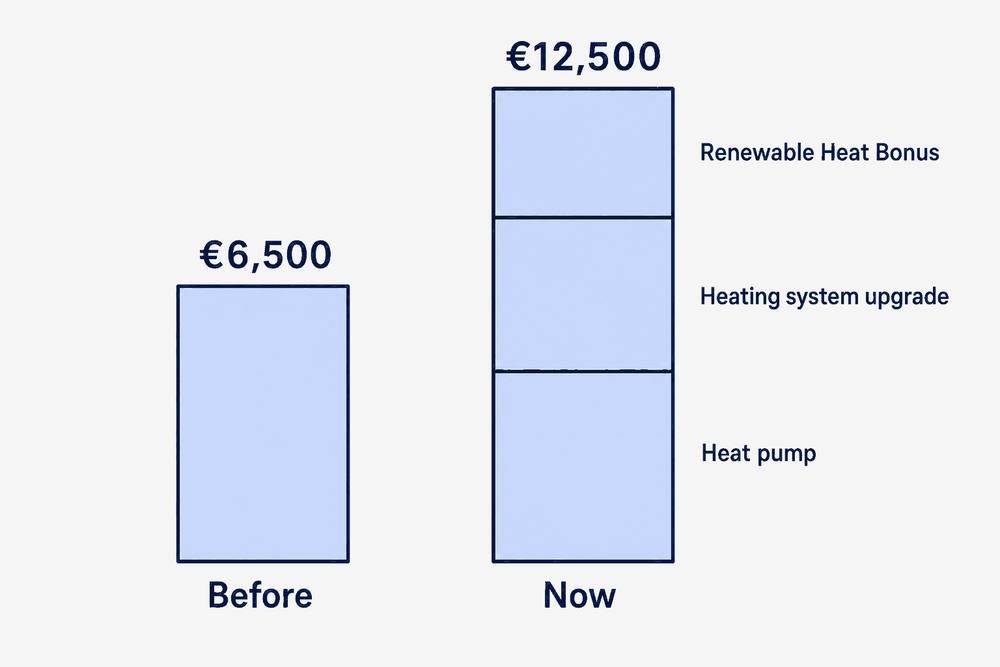
From 3 February 2026, the maximum available for a heat pump system rose from €6,500 to €12,500. The increase came from two additions rather than a bigger heat pump grant: a heating system upgrade grant of up to €2,000 for the works around the heat pump, and a new Renewable Heat Bonus of up to €4,000 for replacing an oil, gas, solid fuel or electric storage heating system.
From 2 March 2026, there is a grant for replacement windows and a grant for replacement doors. Neither existed before. Work ordered since the announcement on 27 January 2026 is also eligible.
Both changes were announced together by the Department of Climate, Energy and the Environment on 27 January 2026.
The amounts, by property type
This is where most coverage goes wrong. The headline figures you see quoted are usually the detached-house maximum, and most homes here are not detached.
Heat pumps
Air-to-water
€12,500 house · €9,500 apartment
Ground-source-to-water
€12,500 house · €9,500 apartment
Exhaust-air-to-water
€12,500 house · €9,500 apartment
Water-to-water
€12,500 house · €9,500 apartment
Air-to-air
€7,500 all property types
Those figures include the heating system upgrade element and the Renewable Heat Bonus where you qualify for them.
Windows and doors
Doors are €800 per door, up to two doors — a maximum of €1,600 — across all property types.
Before you apply: three things that decide eligibility
Your home has to be old enough
The home must have been built and occupied before 2021. For the heat pump grant specifically, there is a second date that matters, which is 2007.
Homes built before 2007 need a technical assessment
A heat pump only works well in a house that holds its heat, so SEAI checks that yours does before paying for one. If your home was built before 2007, you need a technical assessment unless you already hold a valid BER showing a Heat Loss Indicator of 2.3 W/(K·m²) or better. The assessment costs €200 and is itself grant-aided. Homes built from 2007 onwards do not need it.
You need a BER, before and after
A published Building Energy Rating is part of the process. You will also need a new one after the works, which is how SEAI confirms what the upgrade achieved.
The order you do this in matters
The commonest way people lose a grant is starting the work first.
Check your eligibility on SEAI's site for the specific grant you want.
Apply and wait for approval. Do not order materials or start work before you have it.
Use a contractor from SEAI's registered list. For most of these grants the work has to be done by a registered contractor.
Get the work done within the timeframe on your approval letter.
Get the new BER where the grant requires one.
Submit the paperwork and the grant is paid to you, or netted off by the contractor depending on the scheme.
The VAT position, briefly
Two reduced rates sit alongside the grants rather than inside them.
Heat pump supply and installation has been charged at the 9% reduced rate since 1 January 2025, rather than the standard rate.
Solar panels supplied and installed on a private dwelling under a supply-and-install contract are zero-rated. Panels bought on their own are not.
Both are Revenue positions rather than SEAI ones, and a contractor should be applying them without you asking.
What does not qualify
This is the part worth being straight about, because it saves people a wasted afternoon.
Portable and plug-in air conditioners do not qualify for anything. The heat pump grant covers fixed, installed systems put in by a registered contractor. An appliance you plug into a socket is not an installed heating system, however efficiently it heats.
A split air conditioner you buy and have fitted privately will not usually qualify either. The grant attaches to the installation and the installer as much as to the equipment. If the air-to-air grant is what you're after, start from SEAI's registered contractor list and let the contractor specify the system, rather than buying a unit and looking for someone to install it.
Work you have already started or completed without approval, outside the eligibility window.
Homes built or occupied from 2021 onwards.
Why we're telling you this
We sell air conditioners and heating appliances, so we have an obvious interest in this page saying something more encouraging. It wouldn't be true.
What this is worth in practice
We pay the highest household electricity price in the European Union, at 40.42 cent per kWh including taxes in the second half of 2025 against an EU average of 28.96 cent. That cuts both ways for a heat pump. It makes the efficiency worth more, because a heat pump delivers several units of heat per unit of electricity. It also means the sums are more sensitive to your tariff than most coverage suggests, and a heat pump on a poorly chosen electricity plan is a worse deal than it should be.
If you're going down this route, look at time-of-use plans at the same time as you look at the heat pump. The two decisions belong together.
Over 58,000 homeowners took up SEAI supports in 2025, so the schemes are well used and the contractor market is real rather than theoretical.
Where to apply
Everything goes through SEAI directly. Their individual grants section carries the current amounts, eligibility criteria and the registered contractor list, and it's the only place the amounts are certain to be current. This page reflects the position as of 21 September 2026, and the amounts have already changed twice this year, so check before you commit.
What we can help with
We're not a grant advisor and we're not a heat pump installer, so the honest answer on the grant itself is SEAI.
What we can help with is everything the grant does not cover. If you're upgrading a home for efficiency, the appliances in it matter: what appliances cost to run works out where your electricity is going, and understanding the energy label explains how to compare two products properly. If insulating and sealing a house has left you with condensation you didn't have before, damp and condensation in Irish homes covers why that happens.
Up to €12,500 for an air-to-water, ground-source, exhaust-air or water-to-water system in a house, or €9,500 in an apartment. Air-to-air systems are €7,500 for all property types. The maximum rose from €6,500 on 3 February 2026 with the addition of a heating system upgrade grant and a Renewable Heat Bonus.
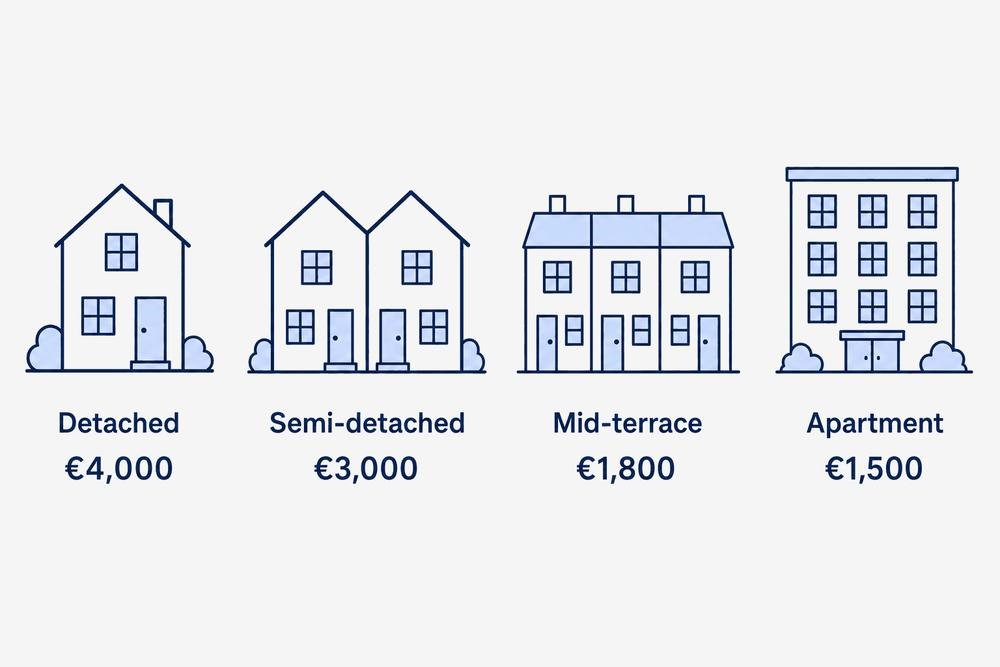
Yes, introduced in March 2026. Windows are up to €4,000 for a detached house, €3,000 semi-detached or end of terrace, €1,800 mid-terrace and €1,500 for an apartment or duplex. Doors are €800 per door, up to two doors.
Yes, and you will need a new one after the work as well. If your home was built before 2007 you also need a technical assessment, unless your existing BER already shows a Heat Loss Indicator of 2.3 W/(K·m²) or better. The assessment costs €200 and is grant-aided.
Only if it is a fixed air-to-air heat pump system installed by an SEAI-registered contractor as part of an approved application. Portable and plug-in air conditioners do not qualify, and a unit bought separately and fitted privately will not usually qualify either.
No. Approval has to be in place before work begins, and starting early is the most common reason applications fail. The exception this year was work ordered after the 27 January 2026 announcement for the new windows and doors grants.
Supply and installation of a heat pump heating system has been charged at the 9% reduced rate since 1 January 2025. Solar panels supplied and installed on a private dwelling under a supply-and-install contract are zero-rated.