
Staff pricing will be applied on all products. Cha-ching!
Lets GO »Your Basket

Phones have got good enough that the interesting question is no longer which one wins. It's how much you need to spend, how you buy it, and how long it will keep getting updates.
You can buy a phone outright and choose any SIM plan, or take a bill-pay contract that bundles the handset into a monthly payment. The second is easier and usually costs more across the term, because you're paying for the handset plus interest inside an airtime plan. Buying SIM-free and putting a competitively priced SIM-only plan behind it is generally the cheaper route over two years, and it leaves you free to switch provider whenever you want.
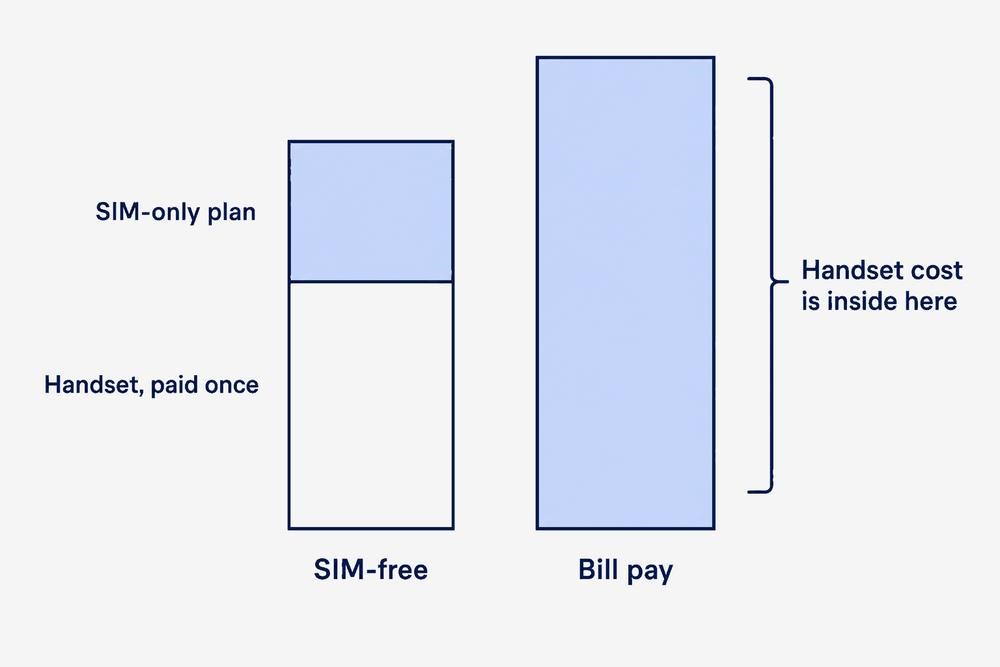
The arithmetic worth doing once
Take the monthly cost of the contract over 24 months, subtract what a comparable SIM-only plan would cost over the same period, and what's left is what you're paying for the handset. Compare that with the SIM-free price. It's often a larger gap than people expect.
Most current phones support an eSIM, a SIM built into the handset that's activated by scanning a code rather than posting a piece of plastic. The networks here support it, and it means you can be on a new plan within minutes and hold two numbers on one phone, which is useful if you carry a work line.
If you travel, an eSIM also lets you add a local data plan abroad without taking your own SIM out. Worth checking a specific handset supports eSIM before you rely on it, because the cheapest models sometimes don't.
Coverage is genuinely uneven outside the cities, and it varies by network rather than being uniformly good or bad. Every operator publishes a coverage map, and it's worth checking yours for the two places you spend most time, home and work, before you commit to a plan.
The phone matters less here than the network does. Any current handset supports the same network bands, so if coverage is poor where you live, a more expensive phone will not fix it. A different network might.
5G is available across the cities and larger towns and continues to expand. It's faster than 4G, and for most people the practical difference day to day is smaller than the marketing suggests. It's not a reason on its own to replace a working phone.
The honest answer is that both are good and the choice is mostly about what you already own.
iOS runs on iPhones only. It's consistent, gets long software support, and works smoothly with other Apple devices. There's one hardware maker, so the choice is between sizes and price points rather than between philosophies.
Android runs on phones from many manufacturers, so the range runs from very cheap to very expensive, with more variety in design, screen size, cameras and charging. It's more customisable. Software support varies significantly by manufacturer, and that's the thing to check.
Switching between the two is easier than it used to be, and both platforms provide transfer tools that move contacts, photos and messages. Paid apps do not transfer, which is the one real cost of switching.
Most of a phone spec sheet is there to justify the price. Four things genuinely affect how a phone feels to live with.
The most important number and the one least often quoted. When a manufacturer stops issuing updates, the phone stops getting security patches, and that's when it should be replaced rather than when it feels slow. Current flagship phones from the major manufacturers commonly promise five to seven years of updates. Budget models often promise two or three. Check the manufacturer's stated support period before you buy, and treat it as the phone's real lifespan.
Capacity is quoted in milliamp hours, and bigger is generally longer, though the processor and screen matter too. Around 4,500 to 5,000 mAh is a comfortable all-day battery for most people. Battery health declines with charge cycles, and it's the most common reason a two or three year old phone feels tired — a replacement battery is usually far cheaper than a replacement phone. Fast charging that gets you to a usable level in half an hour changes how you use the phone; wireless charging is pleasant and slow.
The spec people most often under-buy and can't fix later, because most modern phones have no memory card slot. 128GB is the sensible floor for most people. 256GB suits anyone who takes a lot of photos and video, or keeps music and podcasts offline. 512GB and above is for video creators and people who never delete anything. Cloud storage takes some pressure off, and it's a subscription, and it needs a connection.
Size is a personal preference and worth handling in person if you can. Beyond that, an OLED screen gives deeper blacks and better contrast than LCD, and a higher refresh rate, 90Hz or 120Hz, makes scrolling look smoother. Both are noticeable. Neither is essential.
Covers calls, messaging, maps, social media and photos perfectly well. Expect a plastic body, an LCD screen and a shorter support window.
The value sweet spot. Good cameras, OLED screens, strong battery life, and often several years of promised updates. Most people would be well served here.
The strongest cameras, fastest processors, premium materials and the longest software support. Worth it if you use the camera seriously or keep phones for five years or more.
A refurbished flagship from two years ago often outperforms a new mid-range phone at the same price, and phones are one of the categories where refurbishment works best, because there are few moving parts to wear out.
The two things to check are the battery health figure and how much software support the model has left. A three-year-old flagship with two years of updates remaining is good value. The same phone with three months left is not, whatever the price.
Our refurbished grades guide covers what the grades mean and what you're covered for.
Most people have two or three old phones in a drawer, and it's worth getting them out of it.
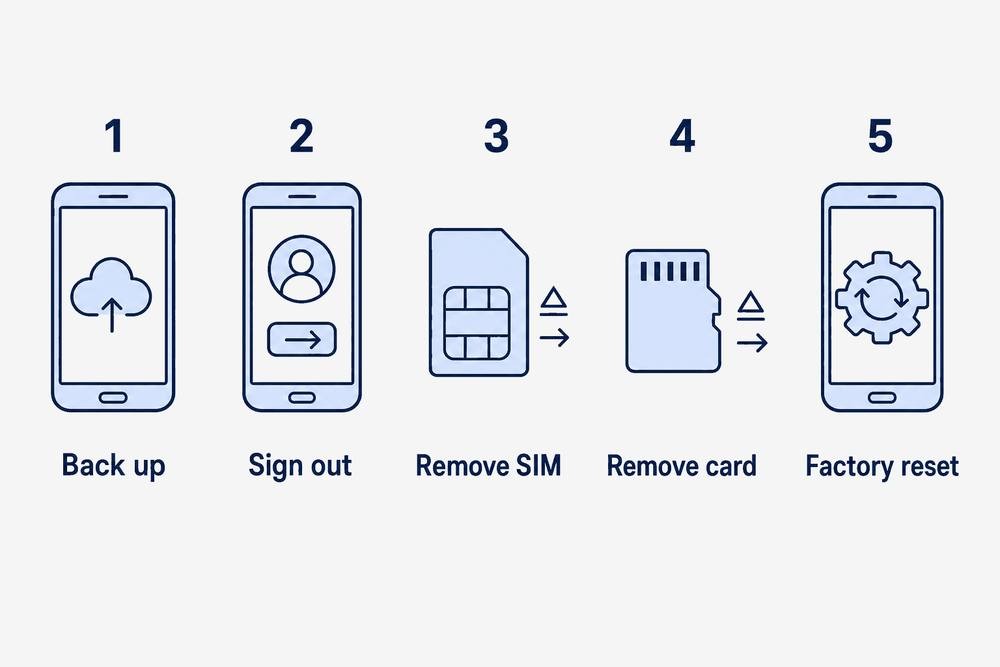
Before it leaves the house, back up your data, sign out of your accounts, remove any SIM and memory card, and factory reset it. Signing out of the manufacturer's account matters, because a device still linked to an account can't be reset by the next owner.
Recycling is the route for anything you're not passing on privately. Under WEEE Ireland's rules we take back old electrical items, and battery take-back requires no purchase at all. 21.1 million WEEE items were collected here in 2025, and phones are among the easiest things to add to that number. Our guide to your appliance recycling rights explains how take-back works.
Every phone on our site shows the price in euro with nationwide delivery, and our team can help you compare two handsets seven days a week. If you want the software support period for a specific model and can't find it, ask us and we'll look it up.
Usually SIM-free, once you add a competitively priced SIM-only plan. Work out the contract's total over 24 months, subtract what an equivalent SIM-only plan would cost, and compare what's left against the handset's outright price. The gap is often larger than people expect.
As long as it receives software updates. Once a manufacturer stops issuing security patches, the phone should be replaced regardless of how it feels. Current flagships commonly promise five to seven years, and budget models often two or three, so check the stated support period before you buy.
An eSIM is a SIM built into the phone and activated by scanning a code rather than inserting a card. The networks here support it. It makes switching provider faster, lets you hold two numbers on one handset, and lets you add a local data plan when travelling. You don't need one, and it's convenient.
128GB suits most people, 256GB suits anyone who takes a lot of photos and video or keeps media offline. Most modern phones have no memory card slot, so this is one of the few specifications you cannot change later.
Often yes. Phones have few moving parts, so refurbishment works well, and a two-year-old flagship frequently beats a new mid-range phone at the same price. Check the battery health figure and how many years of software updates the model has left.
No. Sensor size, lens quality and image processing matter far more than pixel count, which is why a well-processed 12MP photo routinely beats a poorly processed 108MP one. Judge a phone camera on sample images rather than on the number.
The processor is what runs the operating system on your phone. More cores generally means faster performance — a quad-core processor will typically outpace a dual-core one — though the software support figure above matters more for how long the phone stays usable.
Refurbished phones are opened-box display units, returns, or phones with minor cosmetic marks such as light scratches. Ours are graded, and you can see the grading and what it covers in our refurbished grades guide.
Unlocked and SIM free means the phone isn't tied to any network and isn't supplied with a SIM card or contract, so you can use it with any network you like.
Dual SIM means the phone lets you insert two SIM cards and switch between them — handy for keeping a work line and a personal line, or a home number and a travel SIM, on one handset.
Rugged phones are built for the outdoors or harsh working conditions — dust-proof, water-resistant and designed to take falls without damage. Worth considering for building sites, farms, or anyone hard on a handset.
Yes. We stock phones designed for people who find smartphones fiddly — larger buttons, simplified menus and clearer displays, from basic mobiles through to simplified smartphones.
Yes. Our range of kids' phones is picked to suit a child starting secondary school, from basic mobiles through to smartphones with parental controls.
A power bank is a portable battery that charges your phone on the go — small, compact, and worth keeping in a bag for when you're away from a socket.
A smart watch connects to your phone and puts notifications, calls and fitness data on your wrist, so you don't need to take your phone out to check them.
Similar to a smart watch but focused on tracking movement and fitness, feeding what it gathers back to an app on your phone. Usually smaller and longer-lasting on a charge than a full smart watch.
Manufacturers build several regional versions of most phones — for the US, Europe and Asia among others — which can differ in small ways such as charger type or supported bands. We stock the EU version so it's set up correctly for use here.


